Width: 14cms
Height: 18cms
Depth: 19cms
Date: Circa 1880
Product Code: KPOK195
Simply put, POA stands for “Price on Application”.
With some of our pieces, we prefer not to openly publish our asking price. We absolutely welcome visitors to the website to contact us to enquire about the cost of such pieces.
We just prefer to have a conversation to allow us to explain the pricing as well as to talk in more detail about the piece in question.
It doesn’t necessarily mean that it is a super expensive piece but it may just be that there is something unique or special that we would like to be able to tell you about in more detail.
Contact us to find out more.
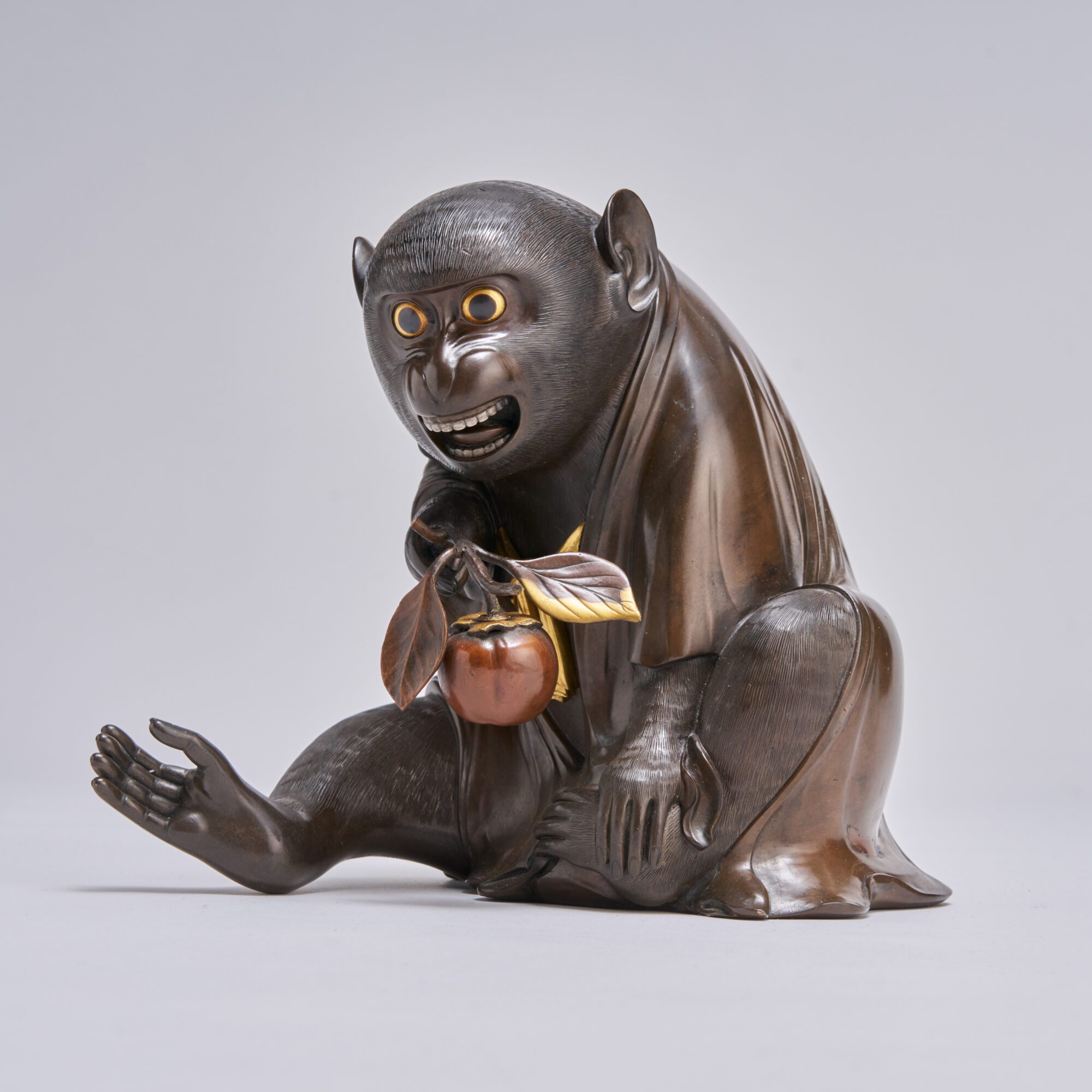
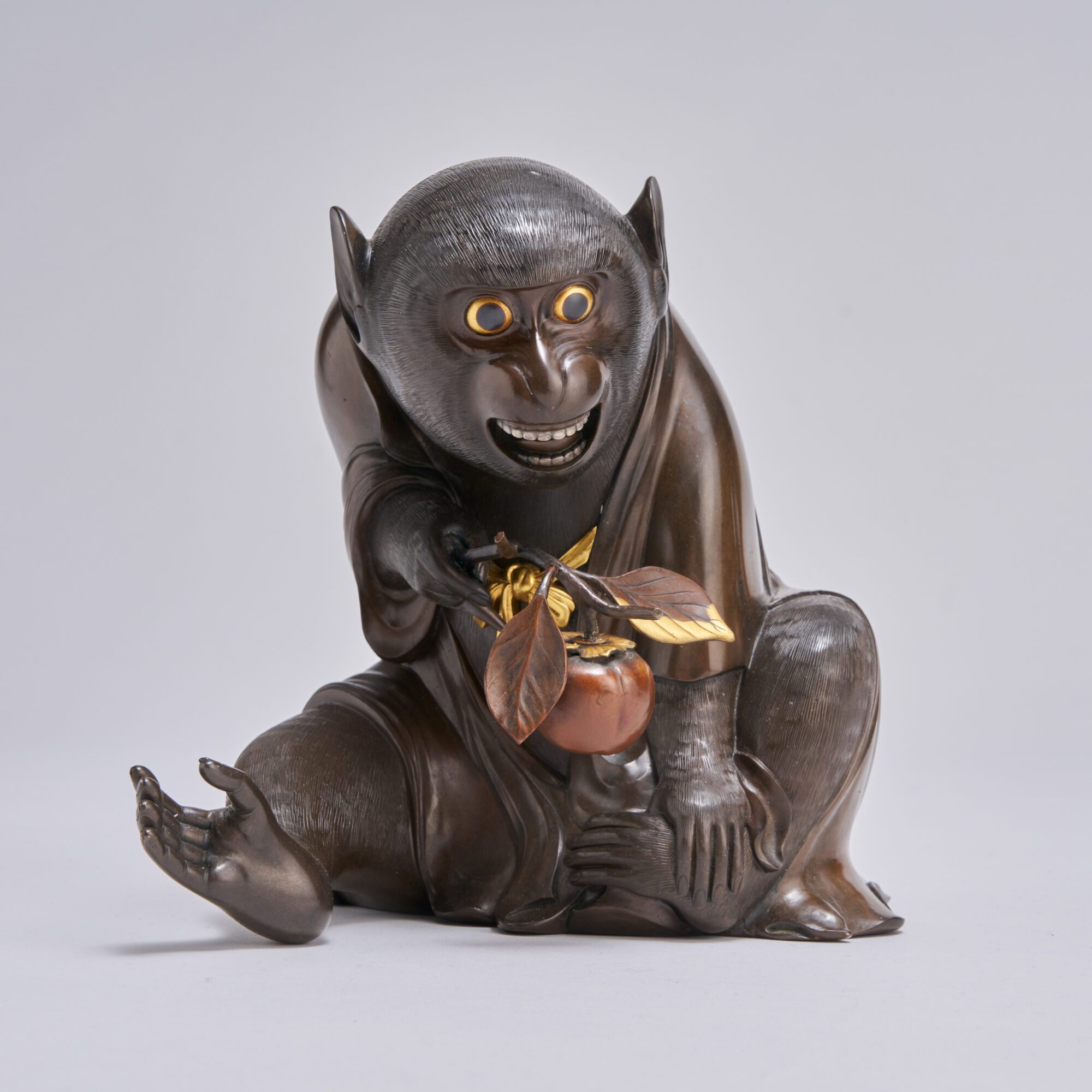
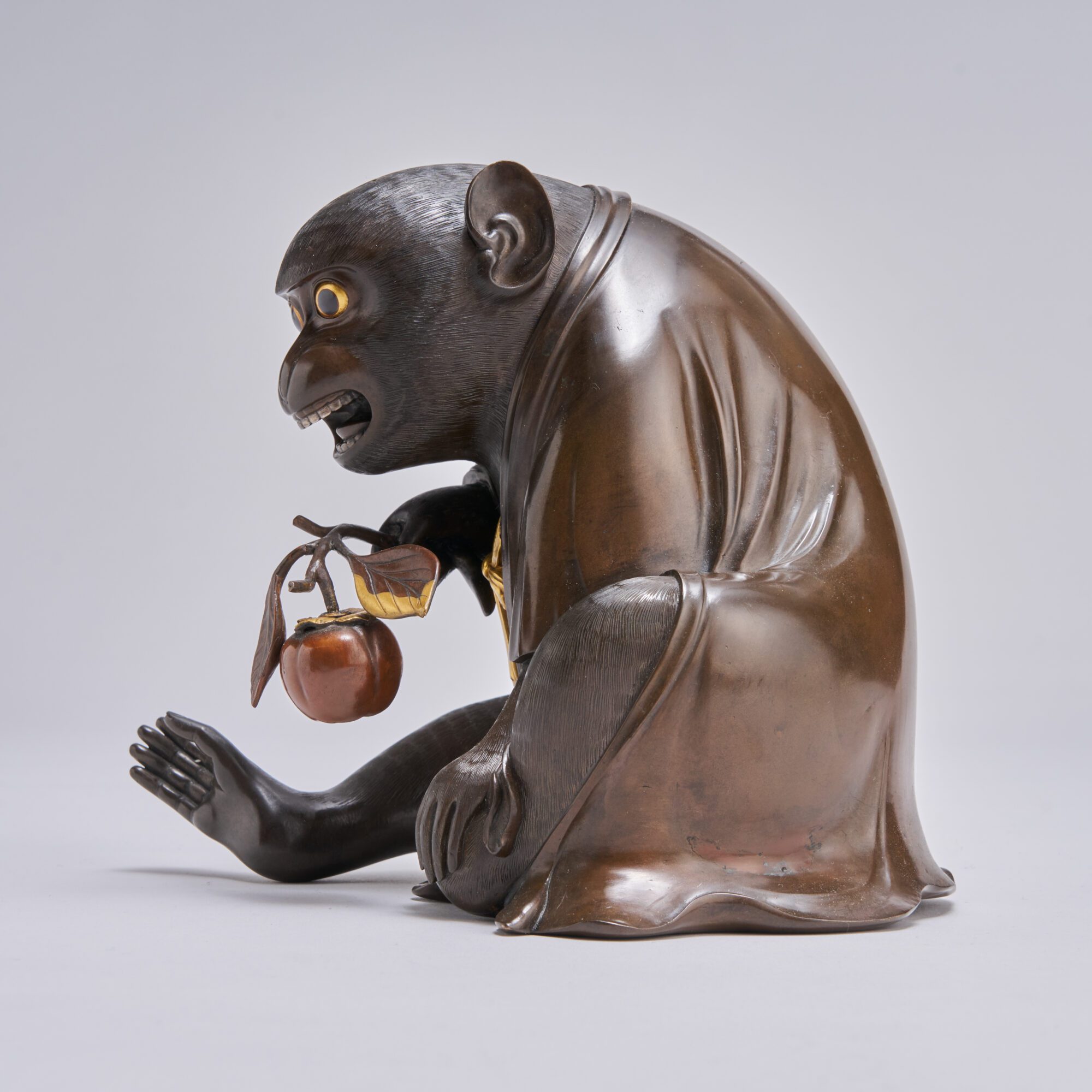
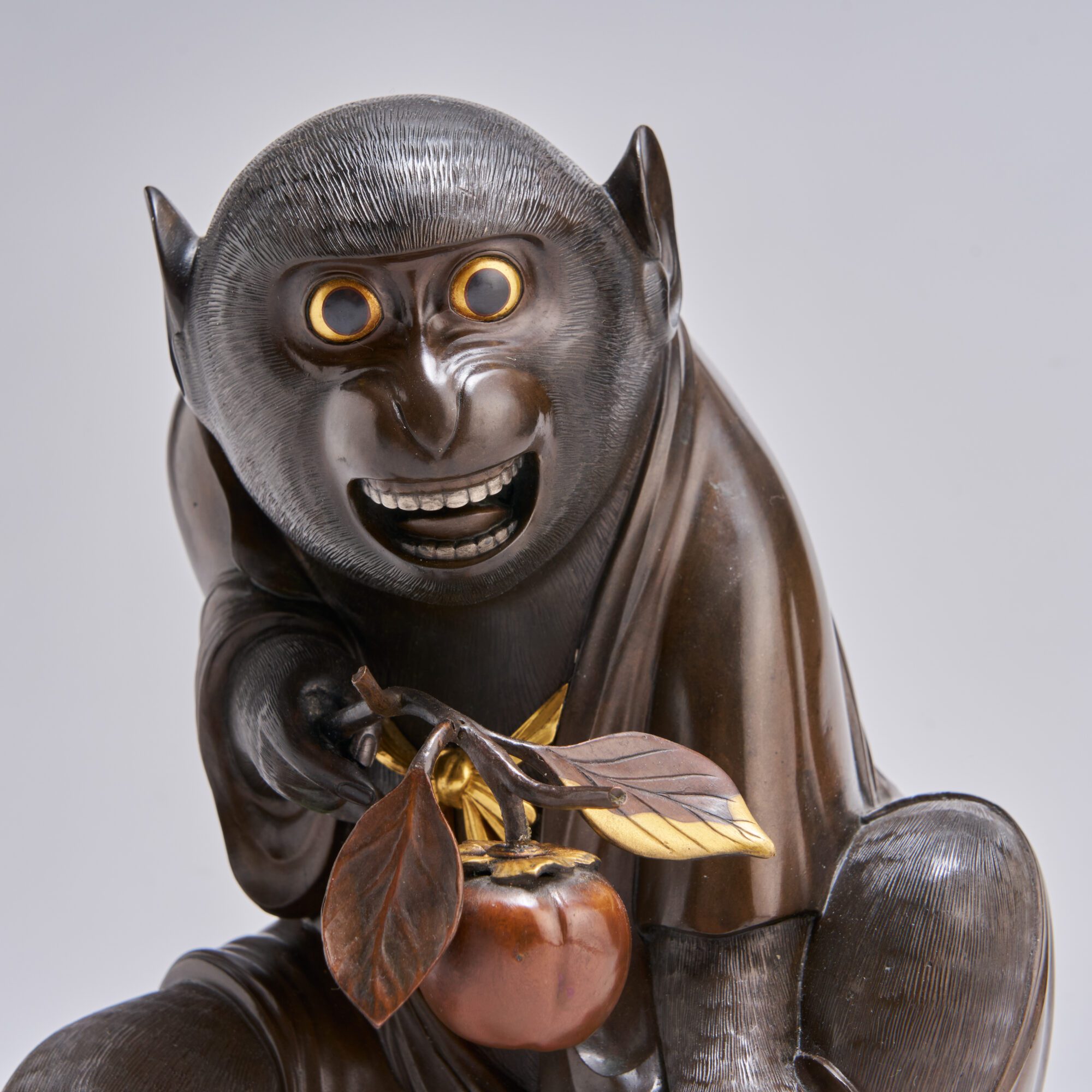
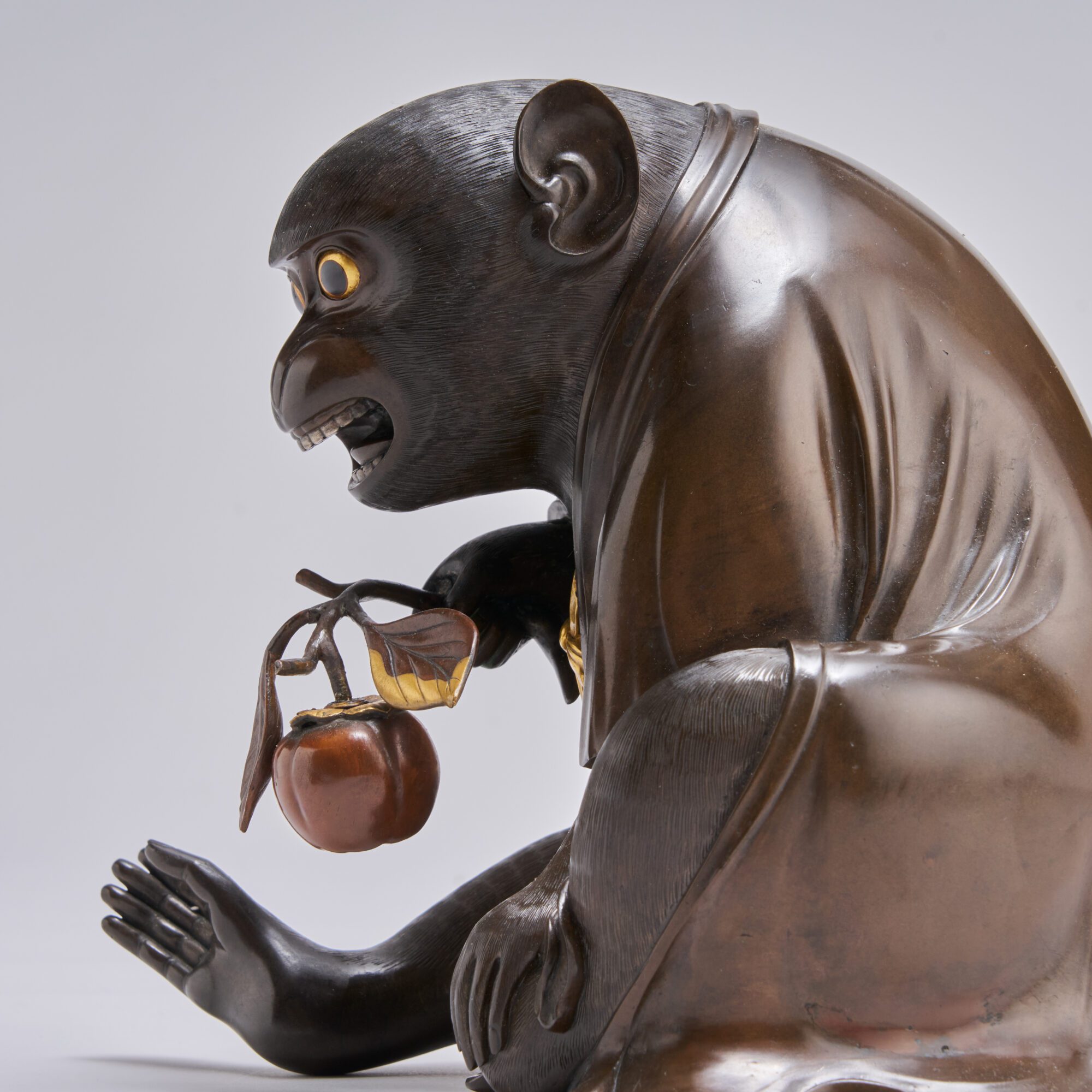
From our collection of antique Japanese metalwork, this late 19th Century / early 20th Century Bronze Okimono in the form of a seated Macaque dressed in human clothing.
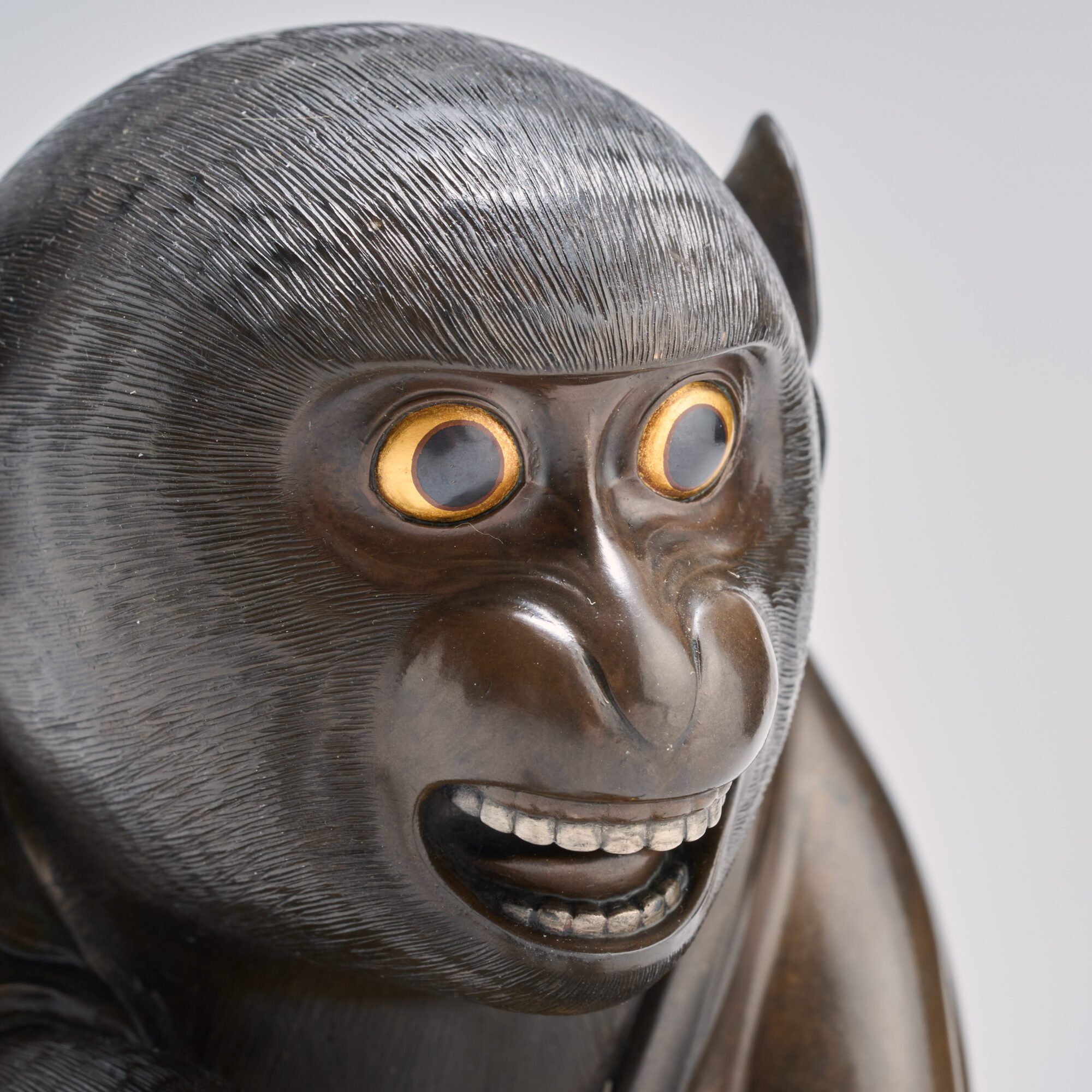
The Monkey with a gleeful expression on his face as he holds a branch laden with leaves and a delicious-looking plump Persimmon. An endearing example of Japanese anthropomorphism, the monkey dressed as a man and unusually appears to have human teeth. You can read our blog about anthropomorphism in Japan by Clicking Here.
In Japanese art, monkeys are often depicted with Persimmon and the tale of “The Monkey and the Crab” is a delightful Japanese folk-story that features a persimmon-loving macaque. You can find our retelling of “The Monkey and the Crab” by Clicking Here.
Gold patination is used to pick out the eyes of the monkey along with the variegated leaves of the fruit.
Offered in fine condition (as shown in the images) and signed to the underside. Please feel free to contact us for further photographs, video or to arrange a viewing in person or online.
Click on the video below to see a slideshow of photographs of this delightful Okimono:

Monkey
In Japan the monkey is a protector of horses and mediator between humans and the Gods. It has the power to dispel evil spirits and to bring good fortune. Due to their playful nature and characterful faces, they are also often depicted as creatures of humour.
Anthropomorphism in Japan
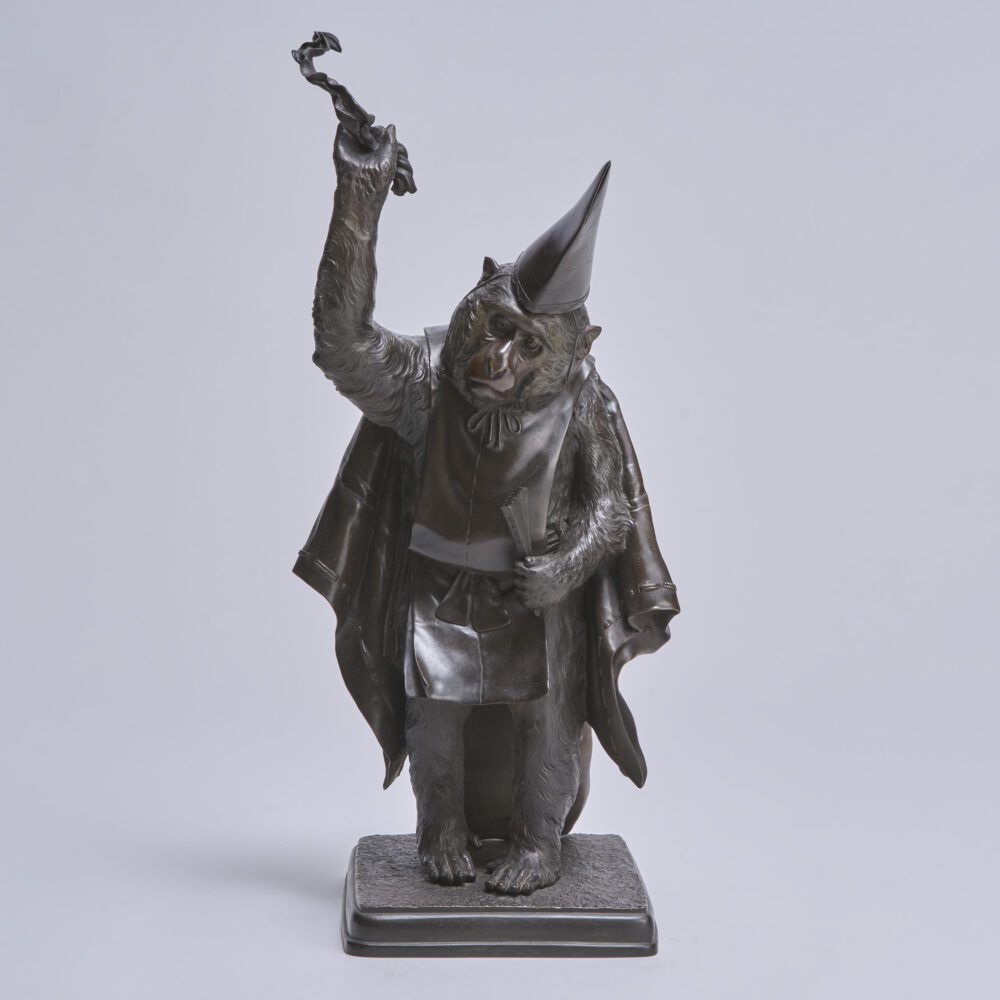
Japan has a long history of anthropomorphizing animals and objects and it is an essential concept of the Shinto religion.
Shintoists believe that everything, be it living or not, has a spirit. Japanese folklore features many tales of animals transforming into people and of objects being neglected and taking on a life of their own to haunt their owner.
Some of the very earliest depictions of anthropomorphism in Japan are the ‘scrolls of frolicking humans and animals’ they date back to the 12th/13th centuries and show many different animals including monkeys, frogs and rabbits doing human activities. These subjects are widespread in all forms of Japanese art and lend themselves to humorous depiction, which is the key to their longstanding appeal.
We completely understand that purchasing art and antiques online is a relatively new concept to many people, so our team will be very happy to provide additional information and support along the way.
We are members of BADA, LAPADA and CINOA, working closely with these associations and we are very proud of our reputation as one of the most established, valued and trusted dealers of Japanese and Chinese Art and Antiques in the industry.
Our galleries in Islington are open Monday through to Saturday (from 1030 to 1630) by appointment only. Please do not hesitate to contact us for more information.
These details have been entered here.
Lorem ipsum dolor sit amet, consectetur adipiscing elit. Aenean non leo varius nibh dapibus vehicula. Donec elementum nunc at nunc ornare vehicula. Nulla suscipit, lectus nec volutpat lacinia, tortor nibh egestas justo, a mollis ligula sem in diam. Nullam ultrices lacinia feugiat. Mauris tempor placerat urna, ut lobortis augue aliquam ut.