

Width: 31cms
Height: 38cms
Depth: 31cms
Date: Circa 1880
£POA - What does POA mean?
Make us an OfferOffer Form
Product Code: KPCE319
Simply put, POA stands for “Price on Application”.
With some of our pieces, we prefer not to openly publish our asking price. We absolutely welcome visitors to the website to contact us to enquire about the cost of such pieces.
We just prefer to have a conversation to allow us to explain the pricing as well as to talk in more detail about the piece in question.
It doesn’t necessarily mean that it is a super expensive piece but it may just be that there is something unique or special that we would like to be able to tell you about in more detail.
Contact us to find out more.
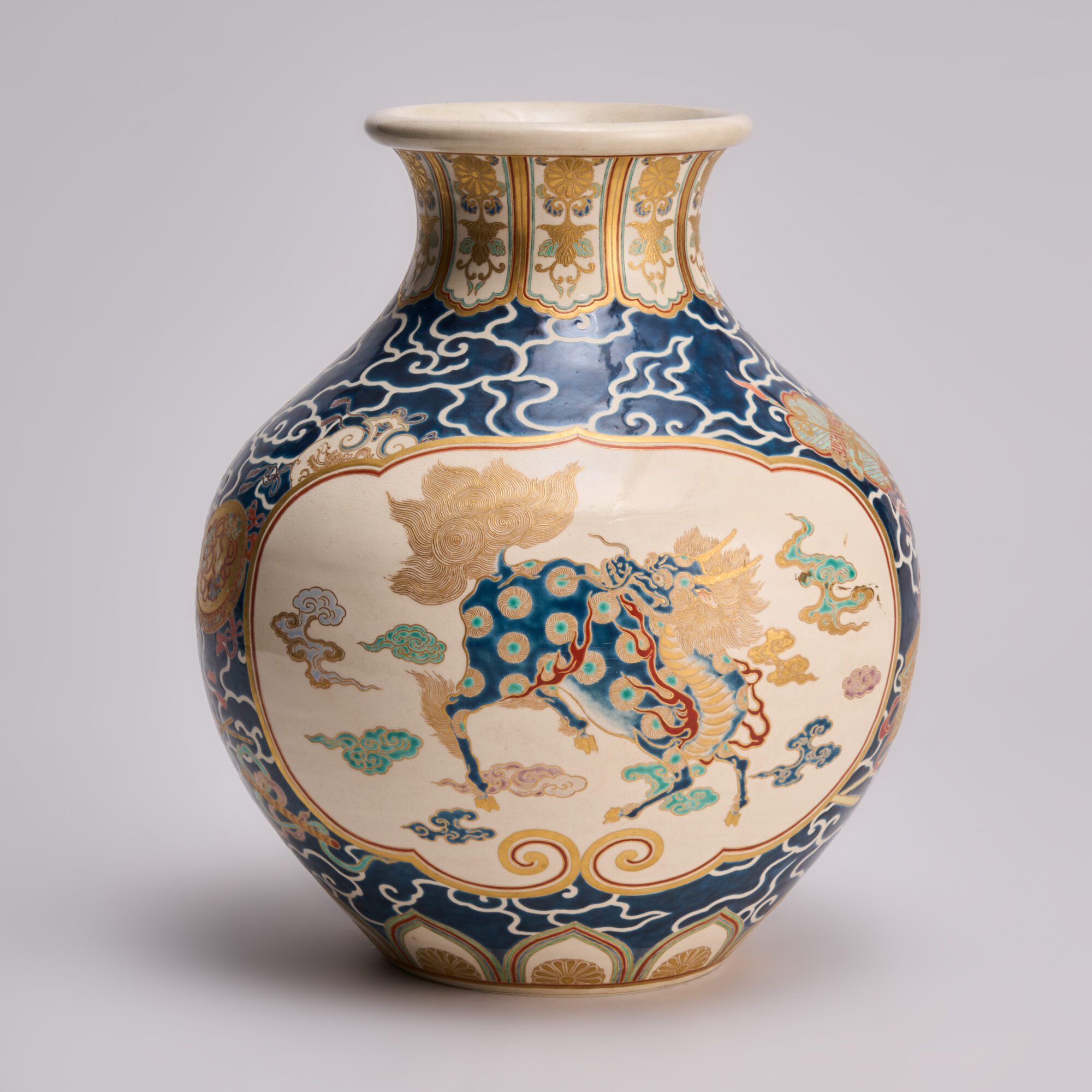
From our collection of antique Japanese ceramics, this imposing Meiji-era Gosu Blue Satsuma vase with elaborate multi-coloured decoration depicting mythical beasts.
The body of the vase with broad, ovoid form under a tall waisted neck and rolled rim. The neck, decorated with a repeated and stylised Chrysanthemum design. To the main body of the vase, two broad panels are framed by a rich Gosu blue cloud design.
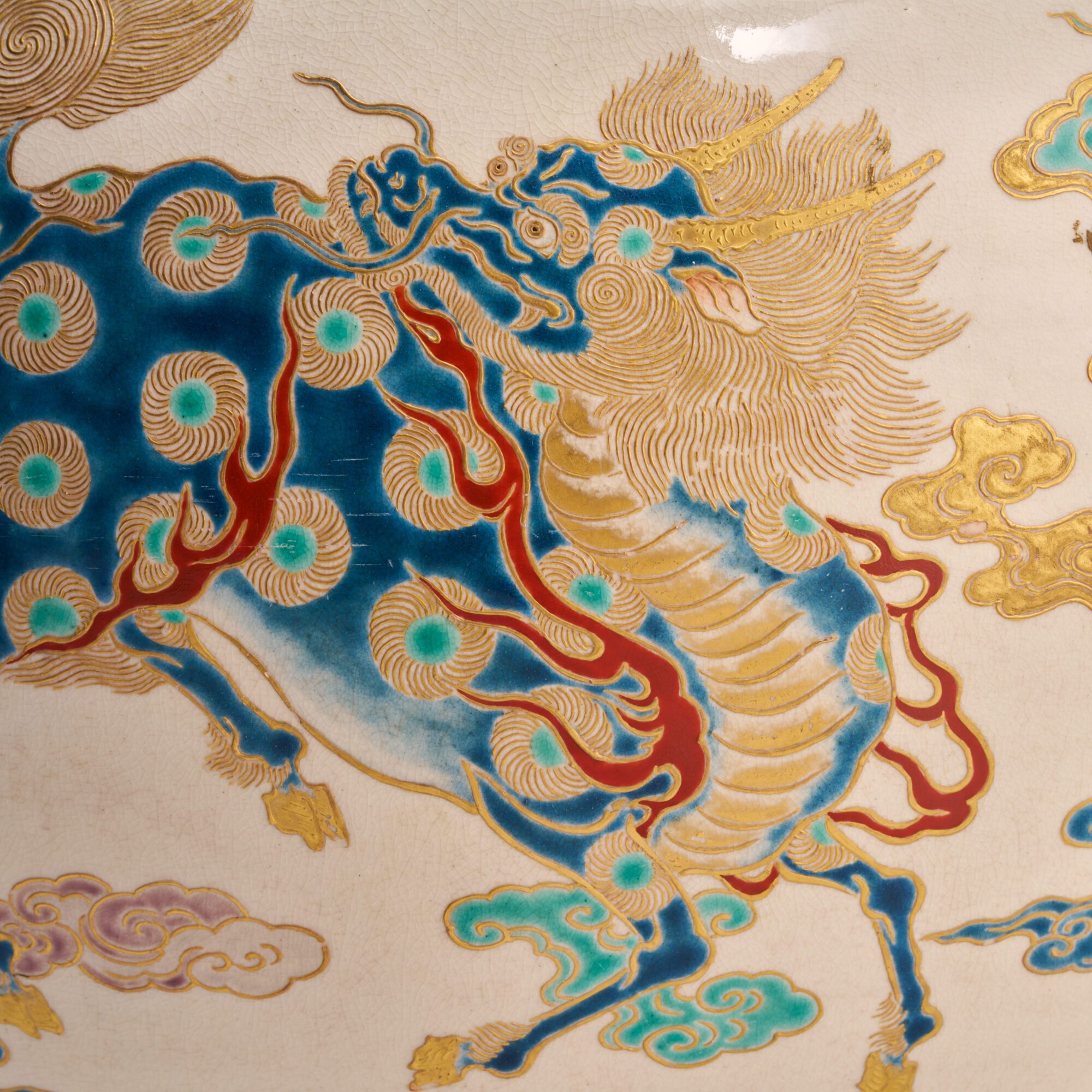
One panel depicts a strutting Kirin surrounded by whisps of cloud in turquoise, pink, Gosu blue, sky blue and Gold. The beast looking over his shoulder as if startled by something. He has a rich Gosu blue body with turquoise spots along with a Gold mane, whiskers, horns, tail and hooved feet.
To the reverse, a glorious Phoenix bird with wings outstretched and lengthy tail feathers creating a natural border to the design.
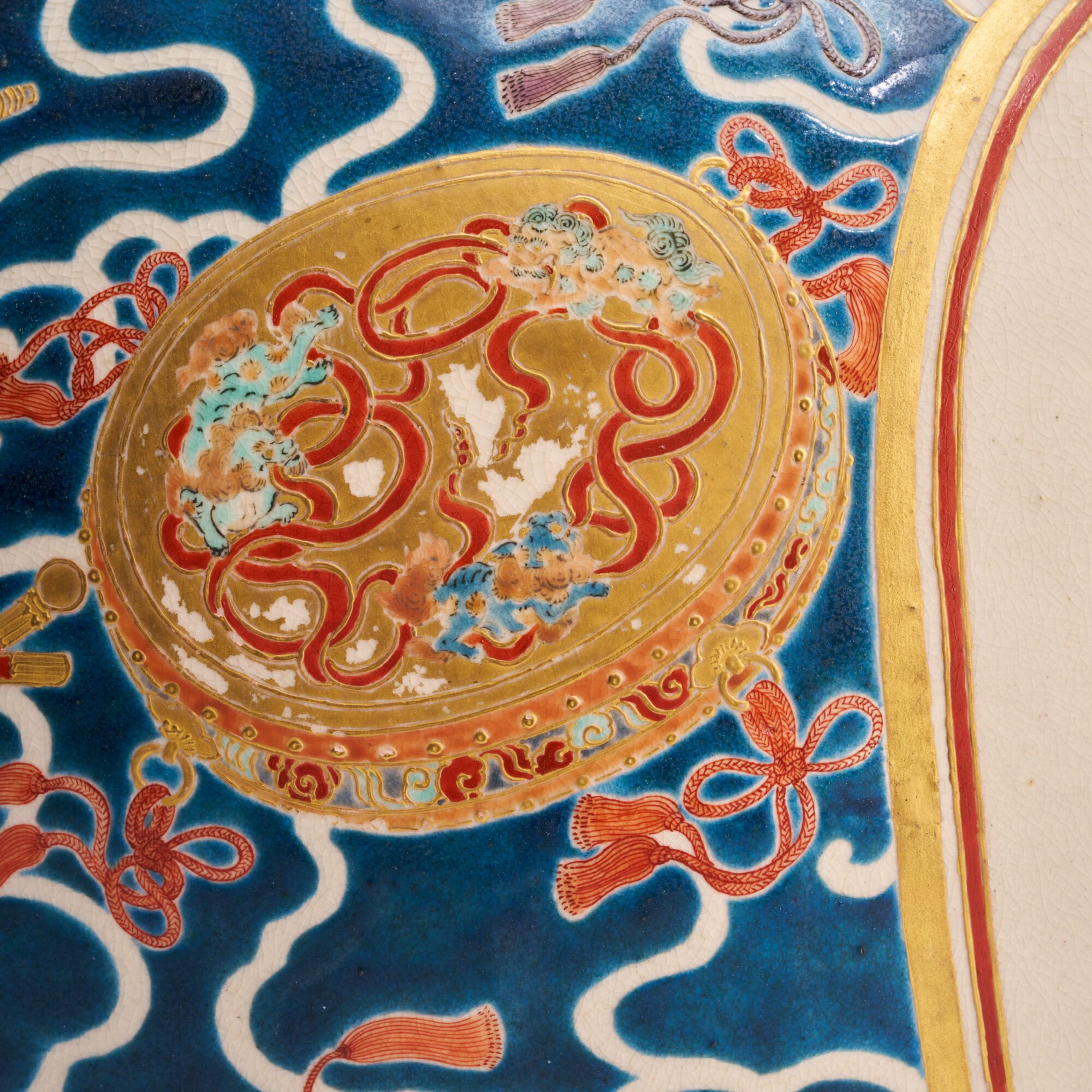
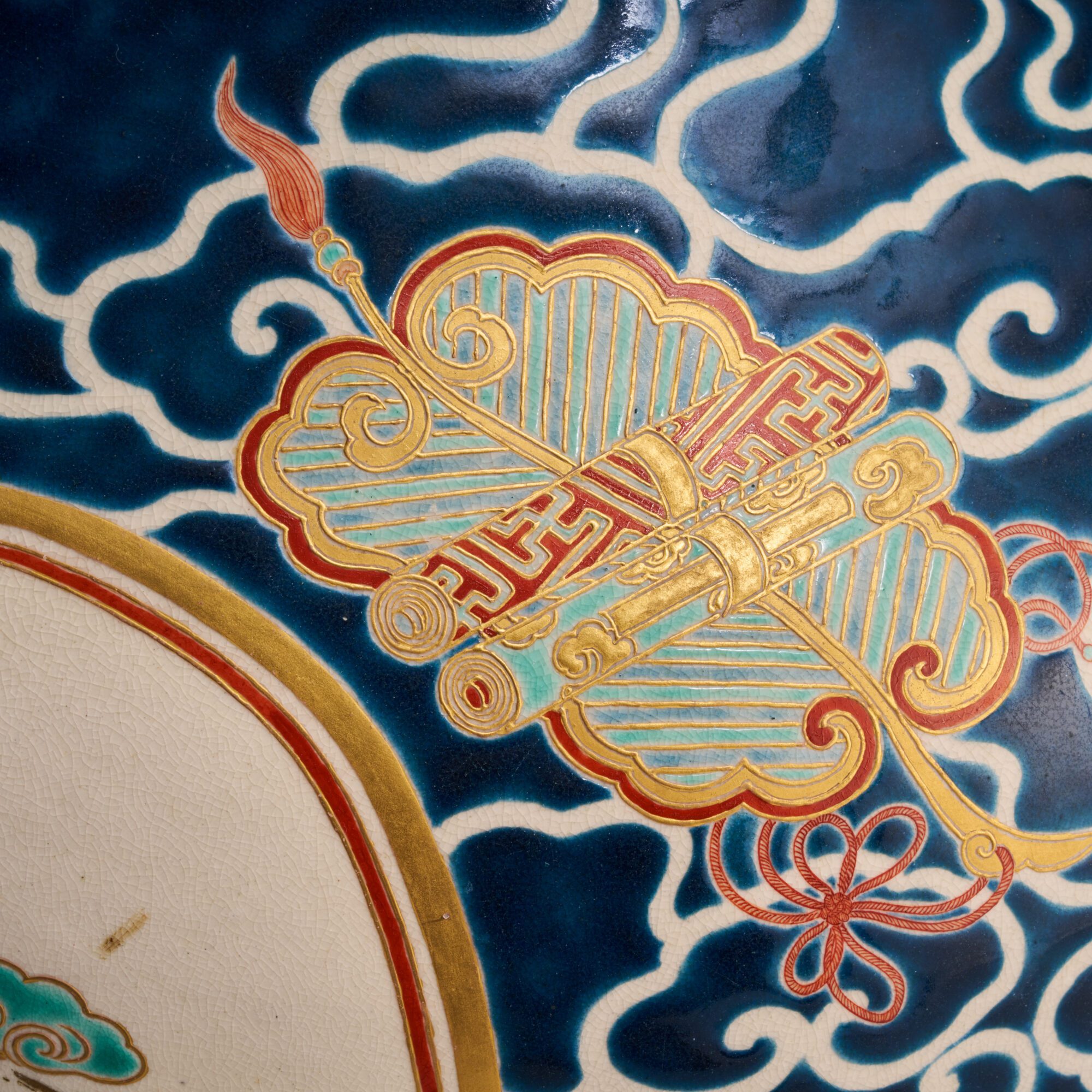
The Gosu blue ground with multi-coloured depictions of scrolls, drums, fans and other musical instruments. The foot of the vase with more repeated Chrysanthemum designs.
Offered in very good condition as shown in the photographs. Feel free to contact us for additional images, information, video or to arrange a viewing in person.
Click on the video below to see a slideshow of photographs of this beautiful vase:

Kirin
The Kirin (Qilin in Chinese) is a mythical chimerical creature common in artworks and legends across most of East Asia, it it believed to have originated in China around the 5th century BC. The Japanese Kirin resembles a deer with long slender legs and horns, it is said that they are peaceful creatures with great power, they are able to walk on grass without disturbing a single blade, and they only appear at times when there is peace in the world. When the giraffe was first brought to Japan it greatly resembled the Kirin and so the Japanese word of giraffe is kirin.
Phoenix
The Phoenix is a powerful symbol in Japan and is seen to represent the Empress. When used to decorate an object or house, it symbolises the loyalty and honesty of the people that live there. Traditionally a Phoenix will only stay somewhere, where the ruler is without corruption.
“Gosu Blue”
The term “Gosu blue” refers to a sought-after amongst collectors type of 19th Century Japanese pottery characterized by a distinct, thick cobalt-blue enamel.
Gosu blue is typically rich and completely opaque and is generally applied as a dense, thick overglaze enamel. Dependent on the firing methods, the colour can range from a dark, inky blue to a more greenish-blue or very dark, almost black.
It was primarily produced in Kyoto during the mid-to-late 19th Century (Edo to Meiji periods) and Gosu Blue works were often decorated with intricate polychrome enamels creating a striking contrast against the Gosu blue areas.
We completely understand that purchasing art and antiques online is a relatively new concept to many people, so our team will be very happy to provide additional information and support along the way.
We are members of BADA, LAPADA and CINOA, working closely with these associations and we are very proud of our reputation as one of the most established, valued and trusted dealers of Japanese and Chinese Art and Antiques in the industry.
Our galleries in Islington are open Monday through to Saturday (from 1030 to 1630) by appointment only. Please do not hesitate to contact us for more information.
These details have been entered here.
Lorem ipsum dolor sit amet, consectetur adipiscing elit. Aenean non leo varius nibh dapibus vehicula. Donec elementum nunc at nunc ornare vehicula. Nulla suscipit, lectus nec volutpat lacinia, tortor nibh egestas justo, a mollis ligula sem in diam. Nullam ultrices lacinia feugiat. Mauris tempor placerat urna, ut lobortis augue aliquam ut.