
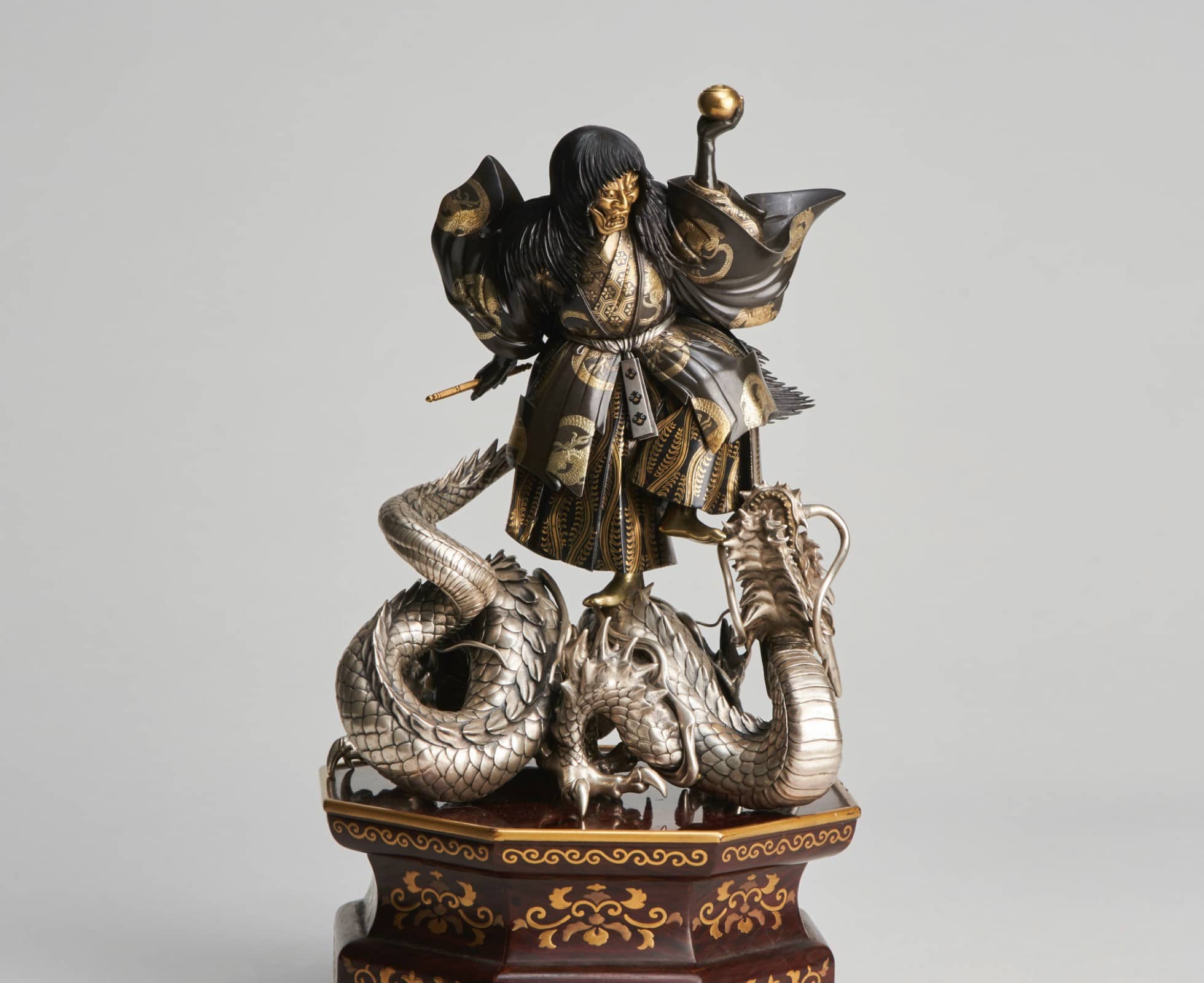


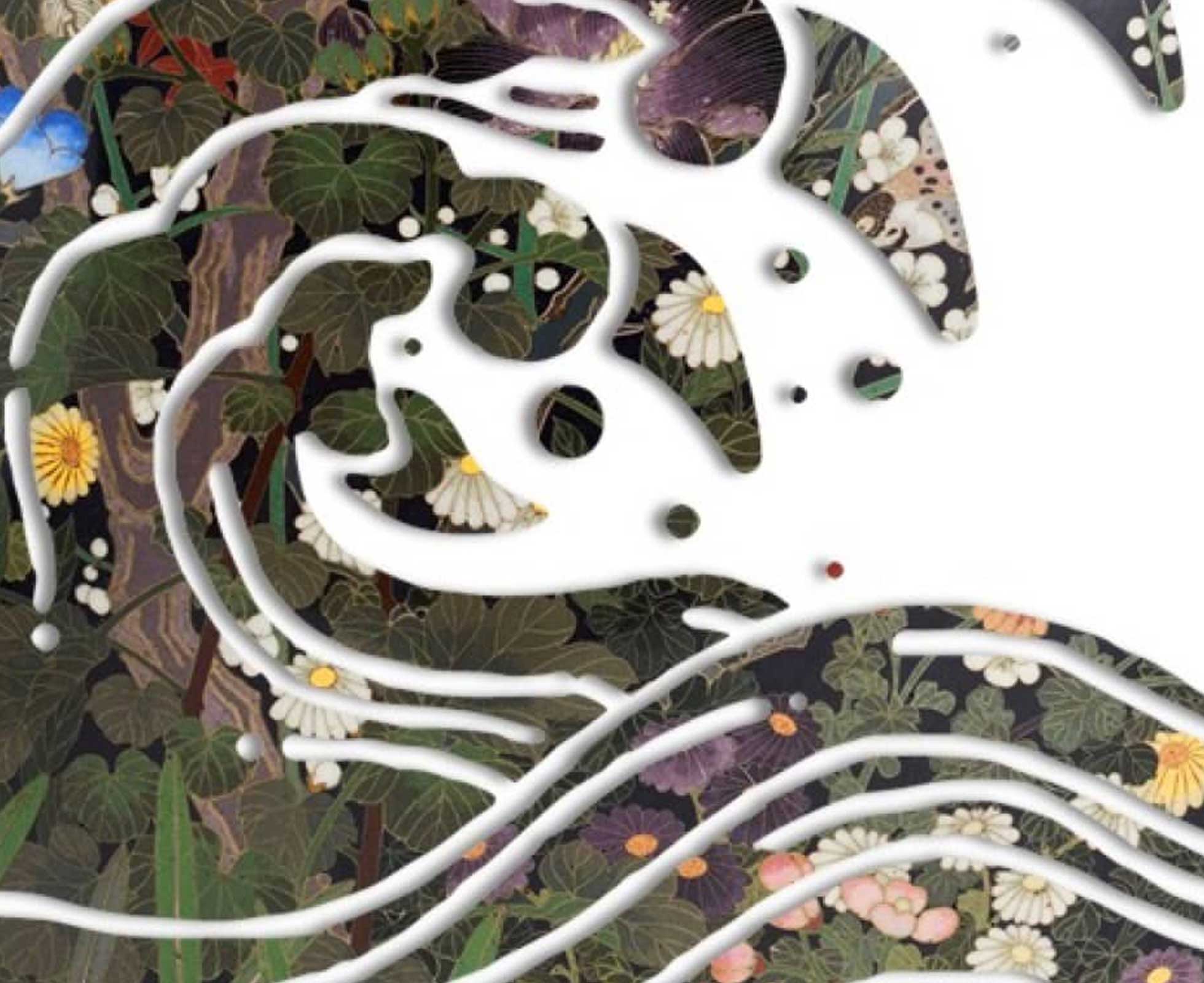

Among the multitude of mythical creatures of Japanese folklore, few are as enigmatic and revered as the Kirin. Described as a chimeric beast combining elements of deer, horse, dragon, and ox, the Kirin occupies a unique space between divinity and nature, ferocity and benevolence. (As always with our short-stories and articles, you can Click on any of the images to take a closer look at the piece in question.)

Its origins can be traced back to ancient China where it is known as the Qilin, the Kirin has been adopted within Japanese cultural, artistic, and philosophical traditions. Over centuries, it has evolved into a powerful symbol of moral virtue, divine judgment, and auspicious transformation.

The Kirin first entered Japan through the trade of Chinese texts, art, and religious ideas during the early centuries of cultural exchange between the two civilizations. In Chinese mythology, the Qilin was considered one of the Four Benevolent Animals, alongside the dragon, phoenix, and tortoise. It was said to appear only during the reign of a wise and just ruler or at the birth of a sage. When these ideas arrived in Japan, they were absorbed into a cultural environment already rich with animistic beliefs and symbolic creatures.

Early Japanese references to the Kirin appear in classical literature and historical texts, where it is described as an omen-bearing creature. Unlike dragons, which were more readily incorporated into local myths, the Kirin retained an air of foreign mystique, often associated with Chinese learning, Confucian virtue, and imperial authority. Yet over time, Japanese interpretations began to emphasize certain traits more strongly, particularly the Kirin’s role as a judge of character and a punisher of evil.

The Kirin’s appearance is famously ever changing and complex. It is typically depicted with the body of a deer, the tail of an ox, hooves like a horse, and a single horn protruding from its forehead. Its body may be covered in scales like a dragon, and it is often surrounded by flames or clouds, suggesting its celestial origin. Despite this fearsome appearance, the Kirin is considered a gentle creature. It is said to walk so lightly that it does not harm even a blade of grass, and it avoids stepping on insects.
This paradox of a powerful, even intimidating creature that embodies compassion and restraint is central to the Kirin’s symbolic meaning. It represents the ideal balance between strength and mercy, authority and humility.

In Japanese culture, the Kirin also came to be associated with justice. Some legends describe it as having the ability to discern guilt and innocence, using its horn to strike down the wicked while sparing the virtuous.
The visual representation of the Kirin in Japanese art has varied widely across time and medium, reflecting changing aesthetic preferences and cultural influences. In early paintings and scrolls, the Kirin is often depicted in a style similar to Chinese interpretations , with an elongated body, intricate scales, and a sense of dynamic movement. These images were typically found in religious context where they represented divine favour.

During the Meiji period (1868-1912), the Kirin became a more common motif in decorative arts, including ceramics, textiles, and woodblock prints. Artists of this era began to experiment with more stylized and imaginative interpretations, sometimes exaggerating certain features or placing the Kirin in fantastical landscapes. The creature’s association with prosperity and good fortune made it a popular subject for household items.

One notable development during this period was the inclusion of the Kirin in netsuke, small carved objects used to secure items to a kimono sash. These miniature sculptures often depicted the Kirin in playful or exaggerated forms, highlighting the artist’s skill and creativity. Despite their small size, netsuke were highly detailed and served as a unique way to depic this mythical creature.

While the Kirin is less prominent in Japanese folklore than some other mythical creatures, it does appear in various stories and literary works. In many of these, it serves as a symbol rather than a central character, appearing briefly to mark a significant event or to convey a moral lesson.

One recurring theme is the Kirin’s role as a harbinger of change. Its appearance often signals the arrival of a wise ruler, the birth of a great leader, or the restoration of order after a period of chaos. This aligns with its Chinese origins but is adapted to fit Japanese historical narratives and values.

In some stories, the Kirin is portrayed as a guardian of sacred spaces, such as temples or hidden realms. It may test the worthiness of those who seek to enter, allowing only the pure of heart to pass.

We hope you enjoyed this read. If you did, you will find over 150 short stories, blogs and articles inspired by our collection of Chinese and Japanese Fine Art and Antiques by Clicking Here.
